
In this blog entry, we are honored to share the writing of Carla:
I bristle when people wish me well on my cancer “journey,” but survivors do have to navigate through diagnosis and treatment. I initially went to my primary care doctor for the abdominal pain and gastro-intestinal (GI) issues when I was 57. The doctor thought it might be irritable bowel syndrome or constipation. After a GI “cleanse,” CT scan, referral to a GI specialist, and colonoscopy, nothing unusual was found. Symptoms came and went over the following year, with increased weight, bloating, pain, and gastro-intestinal symptoms.
A year later, I ended up in the emergency room, where a CT scan and bloodwork indicated ascites (fluid buildup) likely related to ovarian cancer (OC). They were able to drain and test the ascites in my abdomen (almost 3 liters!). I did not yet have a formal diagnosis, but left the hospital to go on a planned vacation with my family. Upon return, I had to get appointments with an OB GYN for the diagnosis and then a referral to a GYN ONC for a treatment plan. The GYN ONC said that the cancer was advanced and would like to do 3 rounds of chemotherapy, then debulking surgery, and 3 more treatments of chemotherapy. They said the cancer would likely recur in 12-18 months. I sought a second opinion from another GYN ONC who suggested an exploratory laparoscopy to see if the cancer was operable. If it was operable, they’d do the debulking and we’d do 6 chemo treatments after. My husband and I liked this approach, so we went with the second doctor. Both doctors said that it was common for OC to be misdiagnosed, since good screening is not available and the symptoms mimic other conditions.
The GYN ONC was able to do debulking surgery prior to chemotherapy and the cancer was staged at 3C. I had a rough recovery, but physical therapy helped me regain my strength. I took 7 weeks off work for the surgery, but worked through the rest of the treatment (6 infusions). After I started to have neuropathy, I iced my hands and feet during chemotherapy with the hope of preventing further damage, since some studies have shown it helps. For side effects, the first few infusions were not too bad, mostly neuropathy in my hands, fatigue, changes in taste, and hair loss. I had problems with mouth sores, making it hard to eat. The last 3 infusions were harder. The fatigue built and my fingernails started to hurt and separate from the nailbeds; my legs hurt and swelled.
My family was very worried, but I tried to keep doing my chores and cook to keep things as normal as possible. My hair loss was significant to my kids in that it was a physical reminder. It was a scary time for my family, but we were hopeful that the cancer would go into remission and life would go on as it had before. I have residual neuropathy in my hands, but I can still embroider and knit. I have less confidence about my strength and have had to work to regain it. I use hiking sticks now, but I still hike.
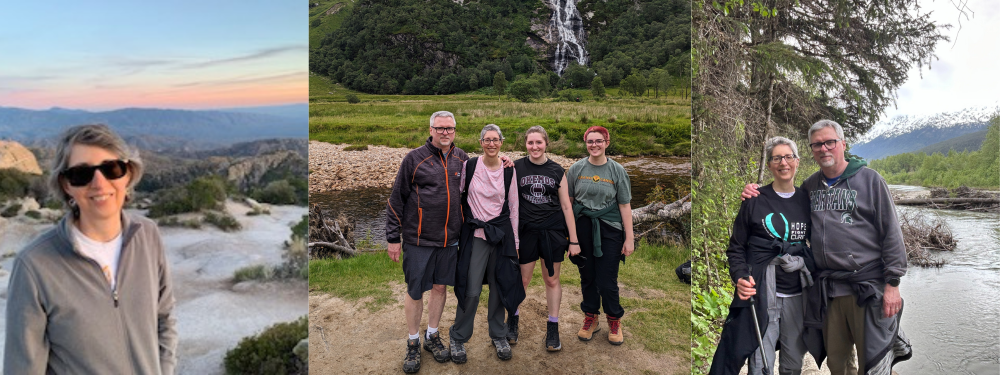
After front-line treatment, I went on an oral drug, a PARP inhibitor, for maintenance. Unfortunately, I had cancer recurrences 1.5 years after front-line treatment, and then again 6 months after my second set of treatments. During treatment for the first recurrence, my husband and I scheduled trips to NYC and Chicago after the first infusion, wanting to fit in some fun and visiting before I got too fatigued. I had a different outlook than I did during front-line treatment, knowing I might be at my strongest. I continued monthly maintenance infusions until my second recurrence. I have started chemotherapy again and received a second opinion. I am working with my care team to potentially alter my treatment plan.
Although I try to keep my life as “normal” as possible, it is not the same. Living with OC is living with a potential cell(s) in your abdomen that may multiply at an exponential rate and bring your life up short despite other plans. This reality is not something friends and family may want to accept or acknowledge, and perhaps it is too much to expect. I find it helpful to participate with OC support groups–I participate in a MIOCA support group and OCRA’s national virtual book group and creative sessions. Seeing others live their lives with grace despite this disease has shown me a path forward, and cancer survivors uniquely understand the situation and emotional ups and downs. I worry about not being there for family and friends in the future, and for the stress my illness may cause them. I am grateful for the life I have had—family, meaningful work, good friends, and adventures along the way. I have been fortunate to have reached 60 and will seek joy in the time that remains.